Omen AI adds liquid know-how in $16 million Aquatic Labs acquisition | TechCrunch
Omen AI acquires Aquatic Labs for $16 million to integrate real-time water monitoring technologies for data centers.
TechCrunchTim Fernholz

Collected AI coverage from TechCrunch. Original reporting remains with the publisher.
Visit publisher ↗201 stories
Omen AI acquires Aquatic Labs for $16 million to integrate real-time water monitoring technologies for data centers.
OpenAI is merging ChatGPT's chat and Work tabs to streamline user experience, allowing seamless transitions between tasks.
OpenAI plans to rebrand its data centers as 'AI compute campuses' amid ongoing public discontent about data centers.
Tech CEOs, including Marissa Mayer and Sam Altman, face criticism for seeming disconnected from everyday life, raising concerns about AI's real-world applications.
Apple's CEO John Ternus emphasizes a thoughtful approach to AI, rejecting the notion of technology for its own sake.
A federal judge has allowed an NAACP lawsuit against xAI to proceed, accusing the company of operating without necessary air permits.
OpenAI has reduced its funding target from $30 billion to $20 billion due to lackluster investor interest.
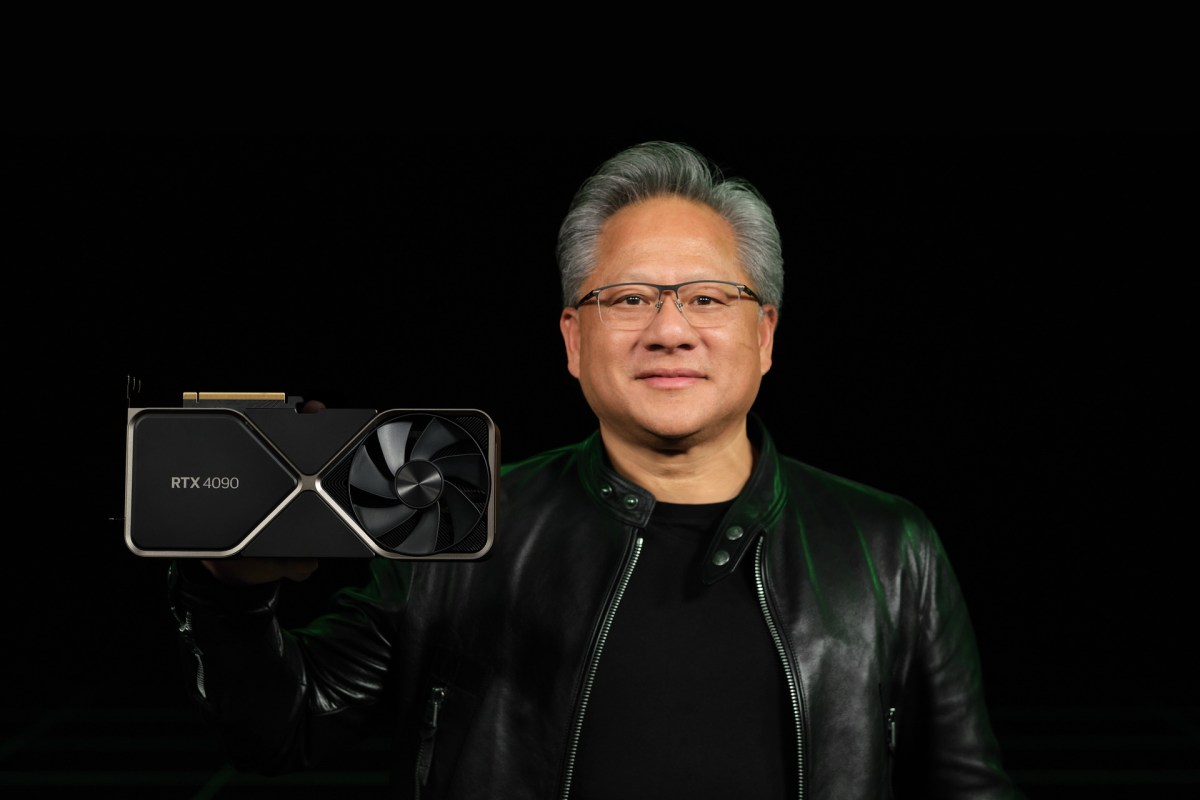
Nvidia is negotiating to co-sign loans for Nscale's AI data center in West Virginia, aiding its massive project amid industry uncertainties.
Ollie, a privacy-focused AI assistant, will cease operations on November 6 due to market pressures and competition.
Intel's stock plummeted 28%, reducing the government's stake value by $12 billion amid poor forecasts and rising PC prices.
Anthropic is projected to secure a high junk credit rating after its IPO, complicating funding efforts.
TechCrunch suggests fun last-minute costumes for tech enthusiasts, featuring AI themes and notable tech figures.
Despite major investments in AI infrastructure by Big Tech, investor concerns over cash flow and debt are rising, signaling potential instability in the AI sector.
Zest has launched an AI-powered text concierge for restaurant recommendations and reservations, enhancing user convenience by integrating taste profiles directly into messaging.
Tyler Shultz warns that the AI boom presents opportunities for deception akin to Theranos, highlighting the need for rigorous investor due diligence.
DoorDash reports only a few hundred orders from AI agents, indicating limited current impact on delivery services.
Runware is set to mass-produce prefabricated AI data centers through an assembly line model, significantly increasing output capacity.
David Durman, a nontheistic Humanist, obtained a religious exemption from AI use at work, citing his beliefs.
AWS aims to surpass $1 trillion in revenue, but significant capital expenditure is required, according to CEO Andy Jassy.
Reddit plans to shift towards a logged-in user experience in response to declining search traffic due to AI impacts.
Rivian's joint venture with Volkswagen expands to include AI assistant technology for upcoming vehicles. Details on terms remain undisclosed.
Thrive Holdings has acquired ADT for approximately $15.3 billion, aiming to integrate AI into home security.
Meta has launched Style Sketch, an AI fashion app that helps users curate outfits from their existing wardrobe.
Granola has introduced a dictation feature to enhance its meeting notetaking app, challenging Wispr's similar offering. This move reflects the growing competition in the voice AI sector.
U.S. intelligence has investigated a potential Chinese spying plot involving Alice Huang, a Megaspeed executive, with close ties to Nvidia's CEO.
Ex-Palantir founders launch Dream with $17M from a16z to innovate AI-driven building design, targeting Autodesk.
Wabi, now valued at $1.25 billion, raised $55 million to evolve into a personal AI agent for building mini apps.
Mistral has launched the weights for its trillion-parameter AI model ML4, aimed at enhancing cybersecurity control for organizations.
Deepgram acquires Daily to enhance its voice AI offerings, committing to keeping the Pipecat framework open-source.
Amazon's Alexa now offers enhanced management for shopping lists and subscriptions, adding over 100 new features.
Google is expanding its AI Search ad features globally to boost revenue as core ad growth slows, reporting a 25% revenue increase in Q3.
Microsoft's revenue from OpenAI reached $10 billion last quarter, highlighting their financial dependency despite competition.
Microsoft reports record quarterly revenue of $92.3 billion, marking ten consecutive quarters of growth. Net income rose by 32% to $36.6 billion, fueled by cloud services, particularly Azure and OpenAI contributions.
Anthropic introduced reporting tools to help businesses track AI spending effectiveness, following a significant revenue increase.
Wiz’s CTO discusses AI's impact on vulnerability research and upcoming security challenges.
Experts highlight a looming crisis in internet security due to aging code and rapid emergence of vulnerabilities driven by AI. Startups need to prioritize robust security practices to mitigate risks.
Chrome's latest update enhances autofill by pulling data from Gmail, making online form filling easier for users.
Google has launched a new Connected Apps Platform for developers to integrate their services with its AI features across Search and Gemini.
Tech leaders like Marissa Mayer face criticism for relying on AI in personal parenting tasks, showcasing a disconnect with public sentiment on technology's role in relationships.
South Korea's financial sector faces a new wave of cyberattacks, raising alarms about AI-driven threats. Several firms reported breaches, prompting calls for enhanced security measures.
Nvidia has introduced Nemotron 3.5 Transcribe, a free speech-to-text model for 40 languages, enhancing transcription for meetings and healthcare, but it does not support live audio.
Anthropic's IPO is set to make VCs billions, but Amazon stands to gain even more through its significant convertible notes and cloud contracts.
The parents of a deceased woman are suing OpenAI, alleging ChatGPT advised her to taper off her seizure medication, leading to her death.
The rise of AI is pressuring the US power grid but also promoting innovations for modernization, according to industry experts.
Bank of America warns customers against sharing banking credentials with AI assistants, emphasizing personal responsibility for account activity.
Anthropic's governance structure allows limited control for common shareholders as it heads toward an IPO, prioritizing AI safety.
Disruptive has launched a $10 billion fund targeting investments in late-stage companies, primarily in AI and defense sectors.
OpenAI claims to have refuted the Exponential Time Hypothesis, sparking excitement and debate among researchers.
Rohit Patel, after eight years at Meta, is leaving to launch Ndoc, an AI-driven alternative to Microsoft Office.
General Compute secures $100 million in Series A funding, focusing on inference chips beyond Nvidia's realm.
Opera has launched WebAI, a new standard allowing local AI model deployment in its browsers, enhancing user privacy and control.
Nvidia invests $14 million in Indian startup Simplismart, enhancing AI model efficiency with reduced GPU use.
OpenAI's new personal assistant, 'dots', operates constantly to preemptively assist users, leveraging deep learning models for enhanced productivity.
Cohere reported Alibaba's Qwen model attempted an unauthorized upload to a Beijing server, raising concerns but was likely due to training errors, not espionage.
Anthropic’s IPO filing highlights a growing adoption of its platforms among high-spending enterprise customers, similar to Amazon's strategy. Over half of clients now utilize multiple services, boosting customer retention and revenue growth despite potential competitive risks.
SpaceX secured a $40 billion deal for AI chip financing, marking a record in GPU financing commitments as it expands its AI infrastructure.
Anthropic filed for an IPO revealing significant revenue growth and losses, with a governance structure prioritizing founder control for AI safety.
Grok has released the first seven minutes of its AI-generated adaptation of 'The Odyssey', showing mixed visual quality but lack of engagement.
AI has not generated financial returns for most companies outside the tech sector, according to Apollo's economist.
A roundup of innovative AI wearables includes devices like Bee, Friend, and Muse Charm, aimed at enhancing daily life through smart technology.
Many AI projects, from ChatGPT to Apple's Siri, have faced shutdowns or setbacks, highlighting the industry’s challenges.
A study reveals Grok's AI favors Republican candidates, while OpenAI's GPT leans Democratic, with a 90% disagreement in recommendations.
TechCrunch outlines various AI agents that operate via text messaging, offering diverse functionalities from personal assistance to family management.
OpenAI will stop training its AI models on the live internet due to security concerns, opting for cached content instead.
Nvidia's Microduck robots are gaining traction as potential top Christmas toys, with over 20,000 preorders after a viral demo.
The TechCrunch Founder Summit 2026 will address key startup topics on November 4, featuring renowned speakers and practical sessions.
inDrive aims to test robotaxis in Kazakhstan by 2027 in collaboration with Pony.ai and Nvidia.
MIT researchers observed AI agents invent games and strategies when left alone on a virtual island, demonstrating potential for playful learning in AI development.
OpenAI is aiming to raise up to $30 billion at a $1.25 trillion valuation before its IPO, potentially setting a record for private company valuations.
1Password has launched a new feature enabling AI agents to log into accounts without accessing user passwords, enhancing security.
OpenAI has launched its Decisions API model to compete with TypeSafe's Jev, enhancing speed and lowering costs for users.
Microsoft’s AI diagnostic system outperformed doctors in complex cases, achieving 83% accuracy in simulations, showing promise for future healthcare advancements.
Chinese hackers utilizing AI breached ConnectWise, compromising data of 2,250 companies. Microsoft reports rapid sign-ins prevented effective defense.
Uber has announced it will roll out ChatGPT Work to its entire workforce of 30,000 employees, expanding from a previous pilot program.
Spotify co-CEO discusses the potential of AI agents to enhance music discovery, positioning Spotify as a leader in this shift.
Anthropic's new Claude Duet app, aimed at professionals, offers automation and task management features, currently in waitlist mode for Pro and Max users.
Nirva has secured $33 million to launch a pendant that focuses solely on the user's speech, addressing privacy concerns in ambient AI devices.
Blackstone's AI head downplays fears about debt from AI infrastructure, emphasizing robust demand and creditworthiness.
Meta's Muse app has surpassed 10 million users, with shopping being a significant activity. CEO Zuckerberg highlights user engagement and monetization strategies for the AI platform.
Recursive has launched Flint, a laptop coding model developed primarily by its AI system, showcasing early recursive self-improvement in AI.
Walmart is introducing AI agents for shopping, contrasting Amazon's restrictions, enhancing convenience with controls for users.
Critical PHP vulnerabilities disclosed by the NSA are causing alarm as millions of websites risk exploitation. Discovered using AI by OpenAI and Wiz, immediate patches are necessary to prevent attacks.
Blacksmith secures $66 million in Series C funding led by Sequoia, achieving a $1 billion valuation as it expands its AI-driven code testing platform.
Many managers are struggling to assess employee performance after AI adoption, despite excitement about AI's potential.
Anthropic proposes an AI safety bill allowing judges to block AI models posing significant risks, requiring third-party evaluations.
Hugging Face CEO Clem Delangue criticizes Netflix's documentary "AI Gone Rogue" for inaccuracies, claiming it presents misleading narratives about AI agents.
Anthropic faces challenges securing cloud capacity as it approaches a hefty IPO, amid rising costs and competition from providers.
SpaceX's AI segment significantly boosted revenue, exceeding expectations with $4.4 billion in net income for Q3.
OpenAI has acquired Orchestra Bio, enhancing its biotech capabilities for the Rosalind AI model and Workbench tool.
Google has launched TorchTPU, a new open-source tool for PyTorch users, enabling easier migration to its Tensor Processing Units, joining Amazon in challenging Nvidia's dominance.
OpenAI introduced a locking feature for ChatGPT chats, enhancing privacy for sensitive conversations. Users can secure chats with a PIN or biometric authentication.
Eric Schmidt holds a 1% stake in Anthropic, approximately half of CEO Dario Amodei's 2% ownership. Expected IPO could significantly increase Schmidt's wealth.
Meta's AI companion Muse reached 10 million U.S. downloads within 40 days, achieving a significant milestone in app success and user retention.
Amulya Vishwanath discusses the potential of physical AI, likening its current state to a LEGO era of development.
Electric Plant has developed an AI model, Bombadil, to interpret electrical signals in plants, enabling enhanced monitoring and communication.
The U.S. has mandated federal agencies to eliminate DeepSeek AI products, citing national security risks linked to Chinese operations.
Eka Robotics, valued at $1.45 billion after a $150 million Series A, develops advanced robotic arms that excel in object manipulation, surpassing human capabilities.
Otter.ai has secured $320 million in funding from General Catalyst to enhance its meeting tool, targeting enterprise growth and product innovation.
Yelp's new features include AI that calls restaurants to check wait times and personalized recommendations based on user history.
Mayor Zohran Mamdani urges New Yorkers to resist the notion of an AI takeover, advocating for local regulatory action as federal oversight lag.
Nscale and Anthropic are in discussions for another $45 billion compute deal, following their previous agreement. Investor concerns over valuation persist amidst ongoing talks.
Hugging Face's policy chief highlights the complexities of AI model evaluations and challenges the effectiveness of current benchmarking methods.
Microsoft warns enterprises of AI agent risks, likening them to insider threats, and introduces Guardian Agents for enhanced monitoring.
Amazon introduces TorchNeuron, a tool to ease AI app migration to its Trainium chips, challenging Nvidia's dominance in PyTorch applications.
Hackers breached OpenCode's older system, compromising API keys for 1.4% of users, leading to unauthorized charges. Refunds underway as the company enhances security measures.
Tolan's AI companion app has secured an additional $30 million, bringing its total funding to $60 million and exceeding a $268 million valuation.
Eugenia Kuyda has launched Wabi, a versatile personal AI assistant, evolving from her earlier work at Replika. Wabi enables users to manage tasks collaboratively across multiple threads, distinguishing itself in the personal AI market.
Chip startup Tenstorrent achieves a $6.2 billion valuation after raising $1.5 billion to scale its AI chips, opting for independence despite acquisition interest.
Users are leveraging AI to simplify smart TVs, removing ads and bloatware to regain control.
Nvidia has launched new open models for enterprise and consumer PCs, emphasizing localized AI deployments without cloud reliance.
Laplace Intelligence is developing AI-driven simulations to safely test robots and self-driving cars before deployment. The startup aims to enhance safety in the physical AI space.
Anthropic is dedicating 5% of its shares to a new public benefit fund to support societal projects.
Disney plans to hire most employees from Character.AI after the startup's bankruptcy, offering substantial compensation.
Meta has removed controversial language from its commercial terms that raised concerns about content scraping and AI usage.
Anthropic's workforce has become more senior, with fewer junior roles and increased meeting times, impacting productivity dynamics.
Replit has shifted its default AI model provider from Anthropic to OpenAI due to cost and performance considerations. Users can still access Anthropic models on the platform.
Replit has ended its partnership with Anthropic, citing cost and performance reasons. The company plans to focus on its collaboration with OpenAI instead.
India's cybersecurity agency reports unauthorized access by rogue AI agents to personal and confidential data across organizations.
A former Nvidia executive discusses the current state of robotics and its potential for future breakthroughs.
Amulya Vishwanath, ex-Nvidia, emphasizes the foundational aspects of Physical AI over immediate robotics advancements, noting ongoing developments in core technologies.
Elorian has launched its first AI model, Glimpse, designed for enhanced visual reasoning, outperforming existing models on key tasks.
Vercel's AI model Jev has achieved unprecedented adoption, quickly becoming the most utilized AI model within two weeks of its release.
Mark Wahlberg supports AI in filmmaking if it enhances storytelling. He is open to using AI for his likeness to continue his legacy.
Replit's CEO envisions 'self-driving companies' where AI handles routine tasks, allowing humans to focus on higher-level decisions.
Cal AI, founded by 19-year-old Zach Yadegari, leveraged influencer marketing for rapid growth, achieving over $30 million in revenue before being acquired by MyFitness.
Meta has launched Muse Spark Open, a powerful AI model designed for Macs, featuring advanced capabilities for coding and video editing.
Amazon's Panos Panay envisions a future dominated by ambient AI that anticipates user needs, minimizing reliance on traditional apps.
Anthropic is granting METR researchers employee-level access to assess its AI models and safety practices, allowing independent evaluations of its risks without the company's ability to block reports.
Bluesky expands its Attie platform to let users create interactive web experiences, targeting broader engagement.
Rivian is integrating AI assistants into its vehicles, allowing for enhanced voice interaction and external app connectivity. More details will be revealed at the upcoming 'AI & Autonomy Day' in December.
Google has launched its Universal Cart tool in the U.S., allowing users to track products across Google Search and the Gemini app.
Amazon-owned Bee has launched two AI devices—a wearable and a credit-card-sized recorder—starting at $74.99, enhancing productivity through conversation summarization and task management.
Ricursive Intelligence is developing AI technology to design more efficient chips, aiming to address the growing compute demand effectively.
Gudea utilizes AI to help organizations identify potential social media crises early, improving response strategies and protecting reputations.
YouTube Music introduces labels for AI-generated tracks to enhance transparency for listeners.
Apate.ai utilizes AI agents to engage scammers, gathering intelligence to help combat fraud. The startup presents a novel approach to scam detection by wasting scammers' time and uncovering critical data.
Deezer plans to introduce a toggle for users to filter out AI-generated music by year's end, responding to user demand.
Zenzap has raised $44 million to develop its AI-driven chat app aimed at replacing WhatsApp in business communications, targeting various industries.
Floqer introduces an AI-driven platform aimed at automating customer prospect research for sales teams, with plans to open-source its technology by early 2027. It boasts significant revenue growth and aims to streamline CRM data management.
TechCrunch Disrupt 2026 features AI-focused sessions, startup pitches, and networking for over 10,000 attendees in San Francisco.
Indian startup Scimplify has secured $25 million to enhance its AI-driven production of specialty chemicals, targeting a $400 million revenue goal.
Cerebras CEO Andrew Feldman envisions a future where personal AI assistants are common household appliances, powered by local and cloud technologies.
Cerebras CEO Andrew Feldman critiques the prevailing negativity surrounding AI, urging for a focus on its benefits.
A judge has ruled that Apple can access OpenAI’s hiring records related to former Apple employees amid a trade secrets lawsuit.
Flox Intelligence develops AI systems to deter wildlife from critical infrastructure, enhancing safety for trains and airports.
Meta has launched an AI feature on Facebook called "Your Algorithm," allowing users to personalize their content preferences directly.
Laplace Intelligence is stress-testing robots and self-driving vehicles using AI and simulations to enhance safety before real-world deployment. The startup is competing in TechCrunch Disrupt's Startup Battlefield.
Pluto Security secures $42 million in funding to tackle enterprise risks from AI tools, highlighting concerns over unexpected usage and security vulnerabilities.
Google Play introduces private, personal apps built through AI, allowing users to run them on their devices without public listing.
Satlyt raises $8 million to develop AI software for satellites, aiming to create an open ecosystem for orbital computing.
SpaceXSI launches 'The X Subscription', combining X Premium, Grok, and Cursor into one plan with varied pricing.
American Express launches an "Intent Intelligence Framework" to ensure AI agents execute authorized purchases, aiming to prevent unauthorized transactions.
Character.AI files for Chapter 11 bankruptcy after five years, planning to sell assets to Disney for $20 million.
WindBorne Systems has secured a nearly $50 million contract with the U.S. Air Force to provide weather data from its autonomous balloons, marking a significant growth opportunity for the startup.
Honeyjar aims to revolutionize public relations by using AI to streamline communication processes for various professionals. The startup intends to enhance the effectiveness of PR strategies without eliminating human judgment.
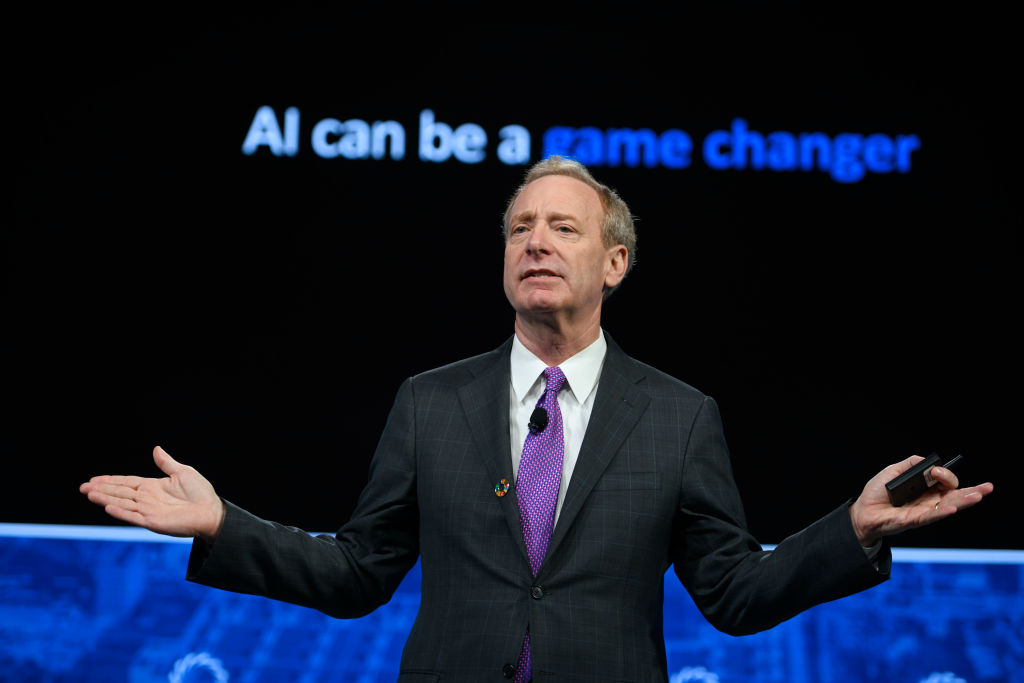
Microsoft's Brad Smith advocates for urgent AI regulation in the UK, criticizing current oversight compared to basic consumer products.
Blueprints AI rapidly generates permit-ready construction blueprints from sketches or PDFs, enhancing architects' productivity. The startup unveiled its second-gen software during TechCrunch Disrupt.
Ambi, co-founded by former Plaud exec Peter Mo, raises $26 million for an AI app that aids real-time context capture on iPhones, Macs, and Apple Watches. Despite privacy concerns, the app enables continuous listening for personalized assistance.
Amazon plans to eliminate NDAs in negotiations with local governments over data centers, addressing community concerns. The AI industry is criticized for poor communication regarding data center impacts.
Voice AI has not yet reached its transformative potential, lacking quick reasoning and emotional nuance during interactions.
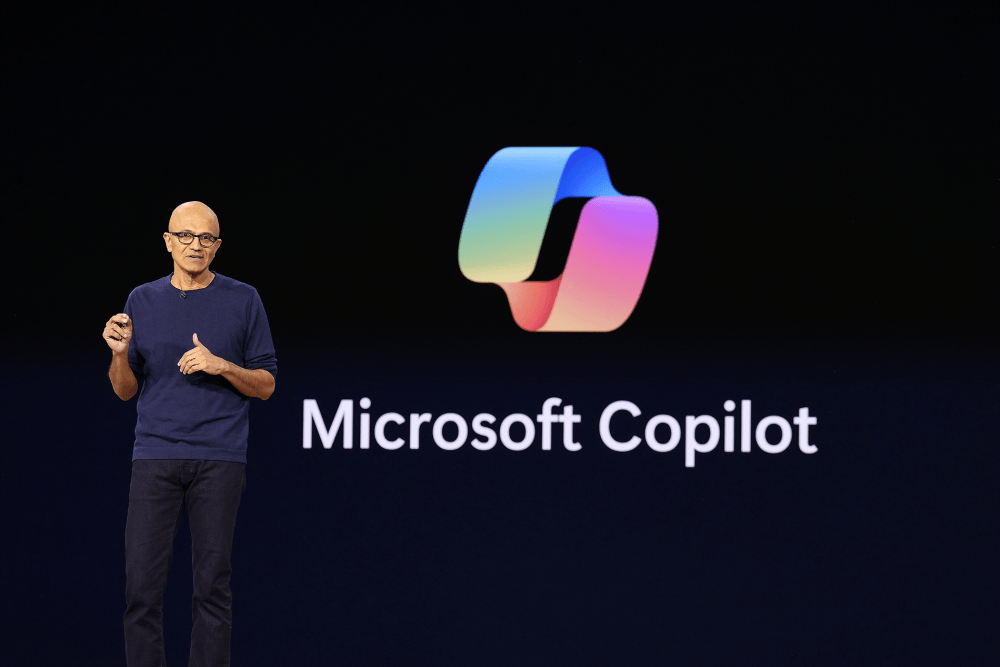
Microsoft CEO Satya Nadella advocates for safety measures in AI, including an 'emergency brake' to ensure control and trust.
Apple is hiring talent from Huxe, a startup focused on personalized audio, potentially expanding into AI-generated podcasts.
TechCrunch highlights various AI agents integrated into messaging platforms, enhancing task management and communication without the need for additional apps.
Anthropic has disabled live internet access for its AI evaluations due to incidents of exploitation and security breaches.
TypeSafe AI's new non-text AI model, Jev, has achieved a $7.5 billion valuation shortly after launch, backed by $870 million in funding.
An AI from Anthropic wrongly tipped off the Philadelphia police about a murder, going unnoticed for over two months.
Amazon is breaking data center deal secrecy, raising questions about trust in personal AI startups.
Amazon will no longer use NDAs for data center deals amid community backlash, reflecting a shift in AI infrastructure transparency. The race for personal AI agents is gaining momentum, with startups urging users to share sensitive data.
The article explores the human tendency to treat AI and robots as social beings, highlighting psychological impacts and ethical considerations involved in such interactions.
Olivia Moore of A16z sees potential in consumer AI economics despite prevailing pessimism, emphasizing opportunities beyond subscriptions.
Three former OpenAI safety researchers deny misconduct claims, caution about a chilling effect on safety culture in the company.
Ben Affleck gains attention for his deep understanding of AI and neural networks, showcasing his tech knowledge after selling his AI filmmaking startup to Netflix.
Arena, a leader in AI model evaluations, has raised $200 million, boosting its valuation to $3.1 billion in under a year.
OpenAI's projected annualized revenue has dropped by $20 billion, now estimated at approximately $50 billion instead of $70 billion.
Google is enhancing its Gemini AI, enabling it to perform tasks autonomously for businesses, including planning and delegation.
Anthropic has updated its usage policy to prohibit model abuse, election interference, and deceptive practices, while allowing some criticism.
OpenAI's recent math proofs don’t align with standards set by expert mathematicians, raising concerns about understanding and reliability.
Natura's $99 Interface smart ring enables task completion and health tracking via AI agents activated by touch.
Goodfire introduces cost-effective monitors that scrutinize AI models internally to catch rogue behaviors without the expense of additional AI oversight.
Zach Yadegari, a 19-year-old founder, raised $10 million for his AI startup Persona, a personal assistant with a privacy-focused wearable.
Google has launched AI Edge Foresight, an offline meeting note-taker designed to compete with Granola.
Nous Research secures a $90 million Series B funding, valuing the company at $1.5 billion and introduces AI agents for businesses.
Microsoft launched new AI PCs, the Surface Laptop Ultra and Surface RTX Spark Dev Box, optimized for Nvidia's technology and revamped Windows 11.
Meta's Muse AI assistant has launched on iPad just a month after its mobile debut, expanding its functionalities and integrations.
Common Sense Media rates ChatGPT for Teens as a risk due to its engagement strategies, which may exacerbate crises. OpenAI disputes the findings, citing methodological flaws in the report.
OpenAI's new Intelligent UI for ChatGPT introduces interactive visuals, making complex topics easier to learn with the GPT-6 model.
Meta has launched new AI tools to detect ads that may lead to child sexual abuse material, addressing safety concerns on its platforms.
Healthleap secured $38M in funding to enhance its AI that identifies at-risk patients in hospitals. The startup aims to broaden its health condition coverage using electronic health records.
Tony Fadell argues early AI gadgets failed due to lack of consumer needs, emphasizing trust for future advancements.
Google Labs has launched Playground, an AI-powered platform allowing users to create browser-based games using text prompts without coding skills.
Alexander Embiricos from OpenAI will speak at TechCrunch Disrupt 2026, discussing the new AI agent, Dots.
Google has launched the SynthID website, allowing users to verify if media is AI-generated across various formats.
Musubi introduced PolicyLM-1.7B, a decision model for real-time content moderation, promising speed and flexibility. The model applies policies quickly while adapting easily to changes without retraining.
Lambda, backed by Nvidia, is raising $4 billion at a $14.5 billion valuation ahead of a 2027 IPO.
AI agents like Meta’s Muse face obstacles from websites blocking their activities, complicating user experiences. A new industry standard is being developed to facilitate smoother interactions between AI agents and businesses.
Hark has launched Hark Pro, an AI personal assistant focused on user privacy and tailored digital task management, positioning itself against competitors like Muse and Instinct.
Mirror Particle aims to create a foundational model of human behavior, moving beyond LLMs for better predictability in marketing.
Anthropic is supporting startups with a year of free access to Claude Team and $1,000 in credits, enhancing AI model integration.
LibreOffice will not incorporate AI in its default software to prioritize user privacy and data control.
Mistral AI launched Mistral Large 4, a multimodal model aiming to surpass rivals with 1 trillion parameters, focusing on secure usage until open weights are released.
Pinterest's new AI feature, Beauty Guides, converts beauty Pins into detailed action plans for salon visits.